← Selected work · 09 — Marketplace · Mobile app and web · Nigeria
Chotcut: a grocery and essentials marketplace built for people ordering for someone else
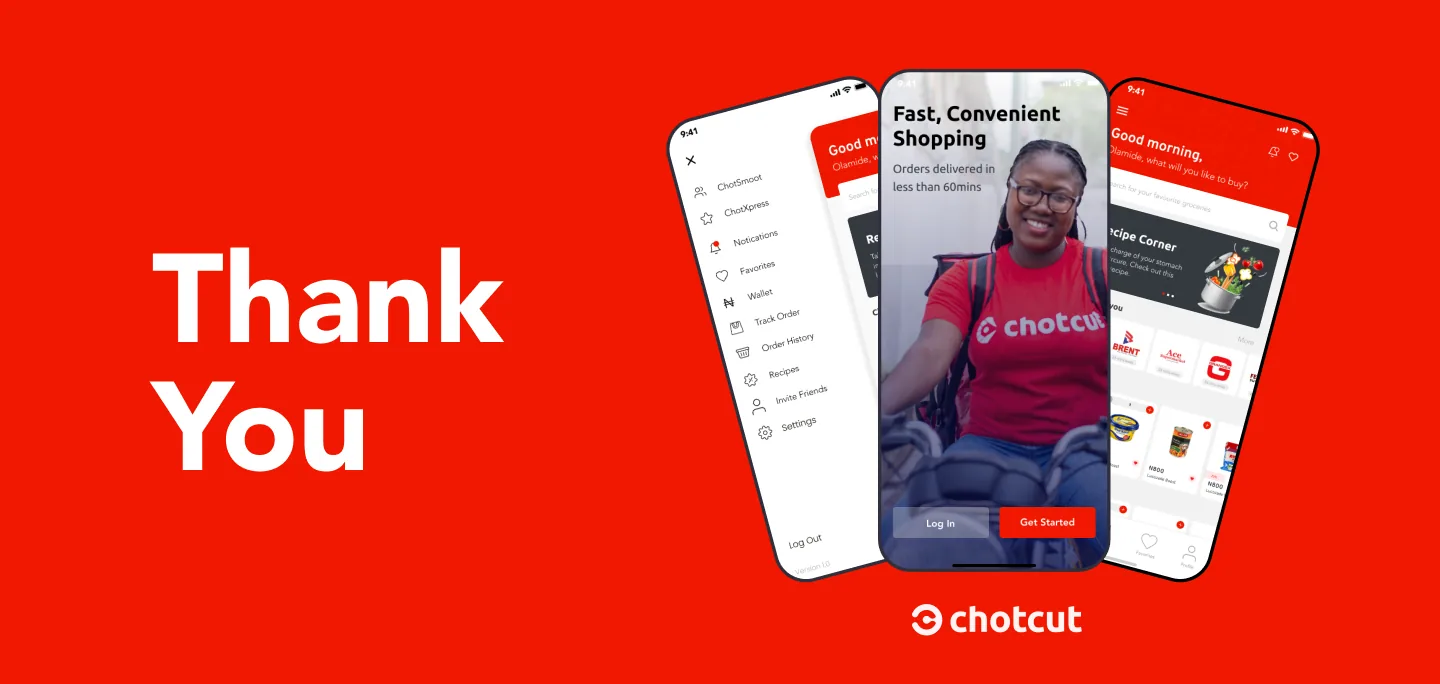
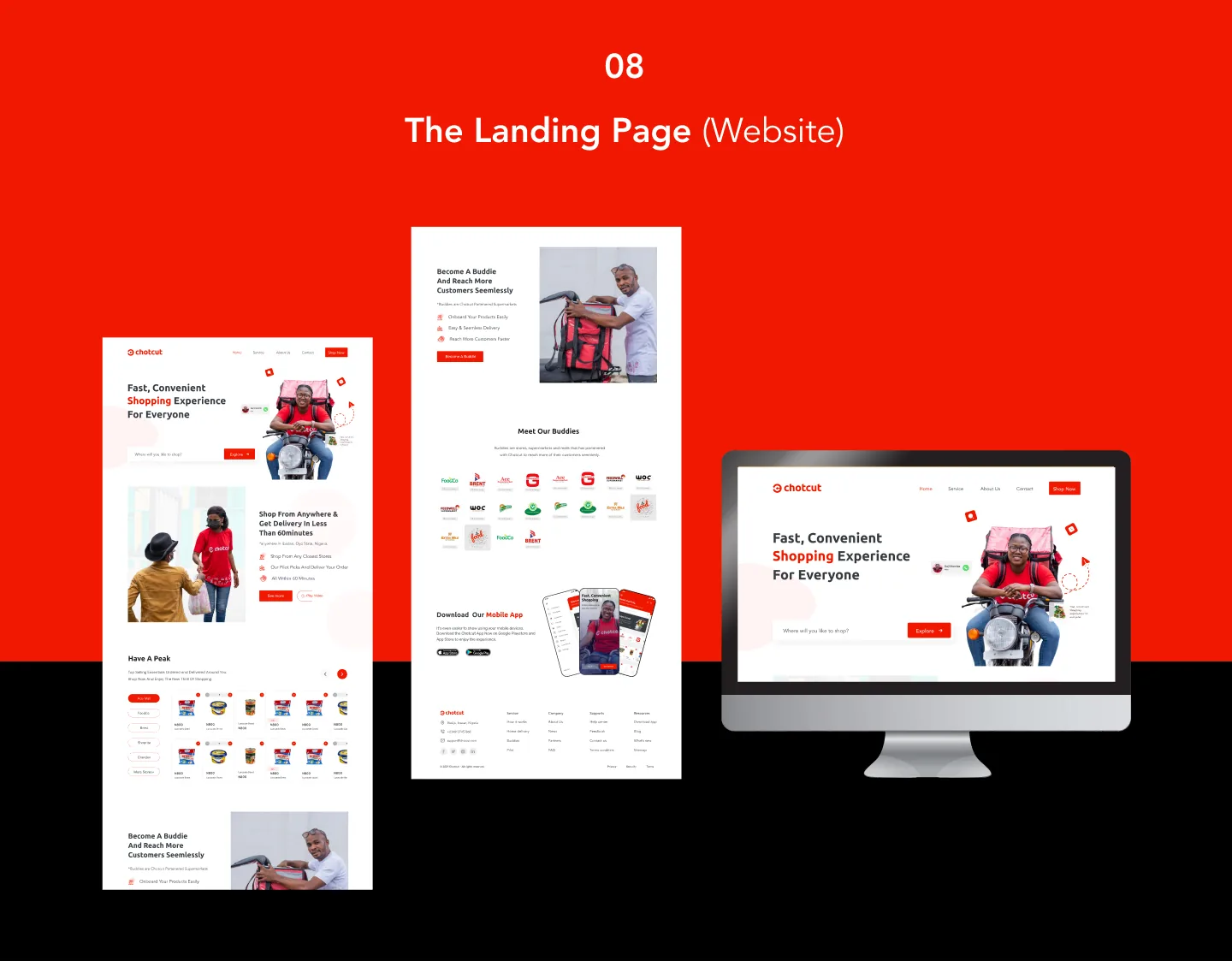
Chotcut let people order daily essentials from nearby supermarkets and have them delivered. I designed the research, the personas and journeys, the mobile app from onboarding to checkout, and the landing page, and the brand around them.
- Role
- Strategic partner and lead designer
- Year
- 2021
- Surfaces
- Mobile app, landing page
- Market
- Urban Nigeria
The problem
Getting daily essentials from a supermarket in a Nigerian city costs time, and the people who most need delivery are often ordering for someone else, a parent, a student or a busy colleague.
My role
Strategic partner under a signed agreement from August 2021; led the product design, from goals and personas to the app screens, the landing page and the brand’s marketing material.
The result
A complete case-study set: goals, five personas with journeys, a user flow, the app from onboarding to checkout, and a landing page. There are no usage results in these files, so none are claimed.
01 — The problem
Shopping for essentials takes time, and often someone else’s.
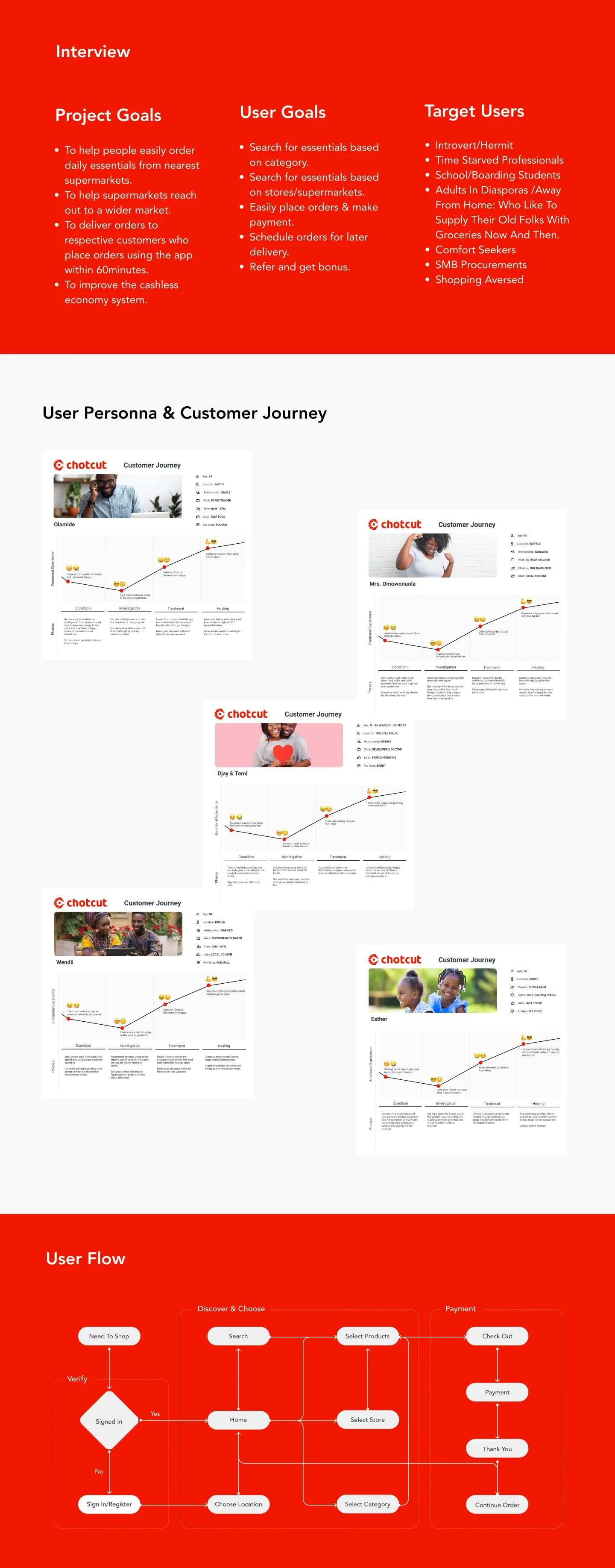
The project goals I wrote down were four: help people order daily essentials easily from the nearest supermarkets, help supermarkets reach a wider market, deliver orders to customers within 60 minutes of ordering in the app, and improve the cashless economy. They are goals, not results.Stated by me
The target users I listed run wider than busy shoppers: time-starved professionals, school and boarding students, small businesses that buy supplies, comfort seekers, and adults in the diaspora or away from home who like to supply their parents with groceries now and then. That last group shaped the design most, because the person ordering is not the person receiving.Judgement
02 — Personas and journeys
Five people, each with a bad day.
I wrote five personas with a customer journey each, moving from the condition they start in, through investigation, to treatment and finally the moment things are fixed. One is Mrs. Omowonuola, 74, a widowed retired teacher whose daughter abroad orders for her through the app; another is a 14-year-old boarding student who cannot leave school to buy what she needs. The journeys are written scenes, not statistics.Judgement
03 — Design decisions
Three design calls.
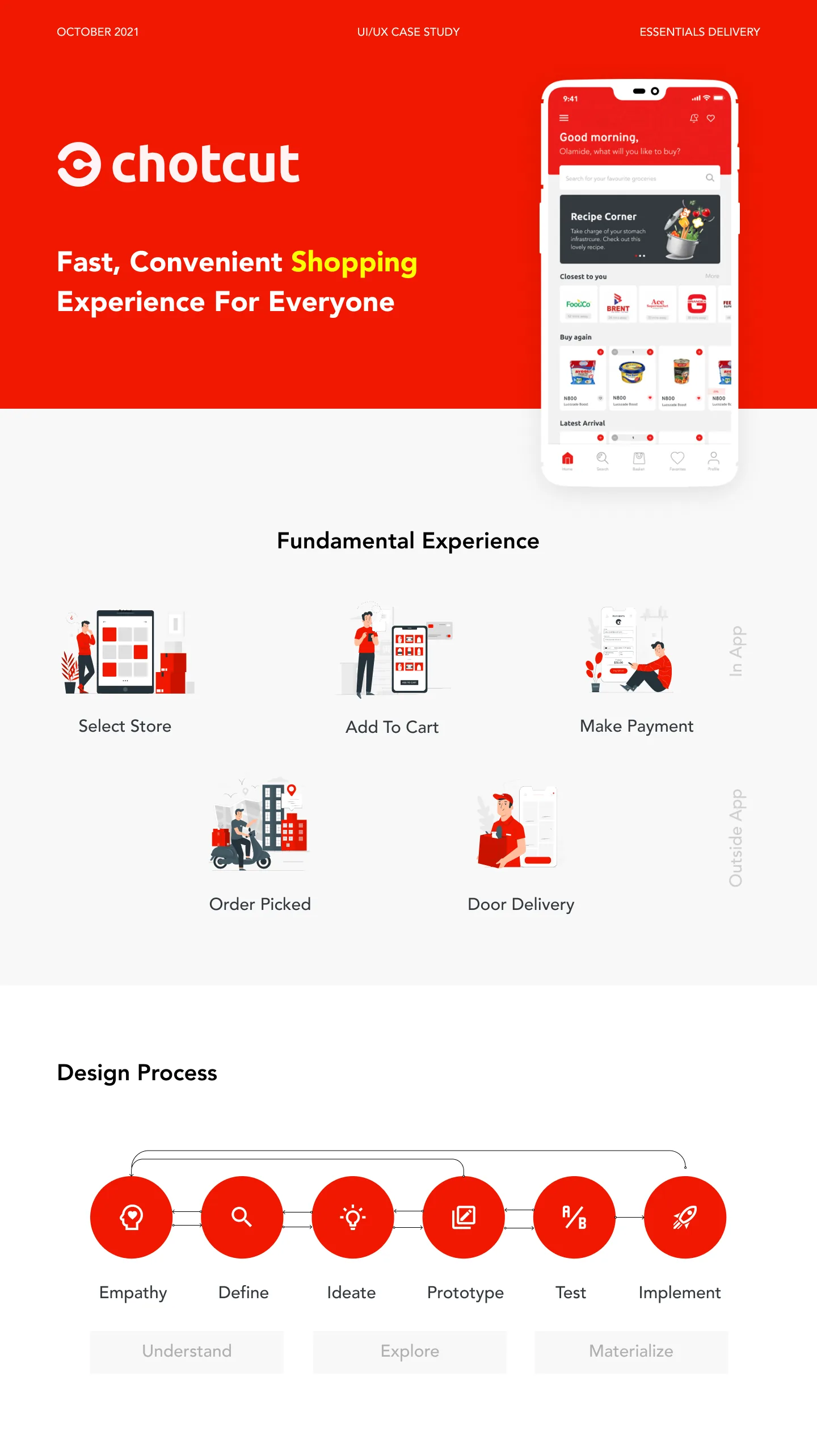
Keep the fundamental experience to five steps
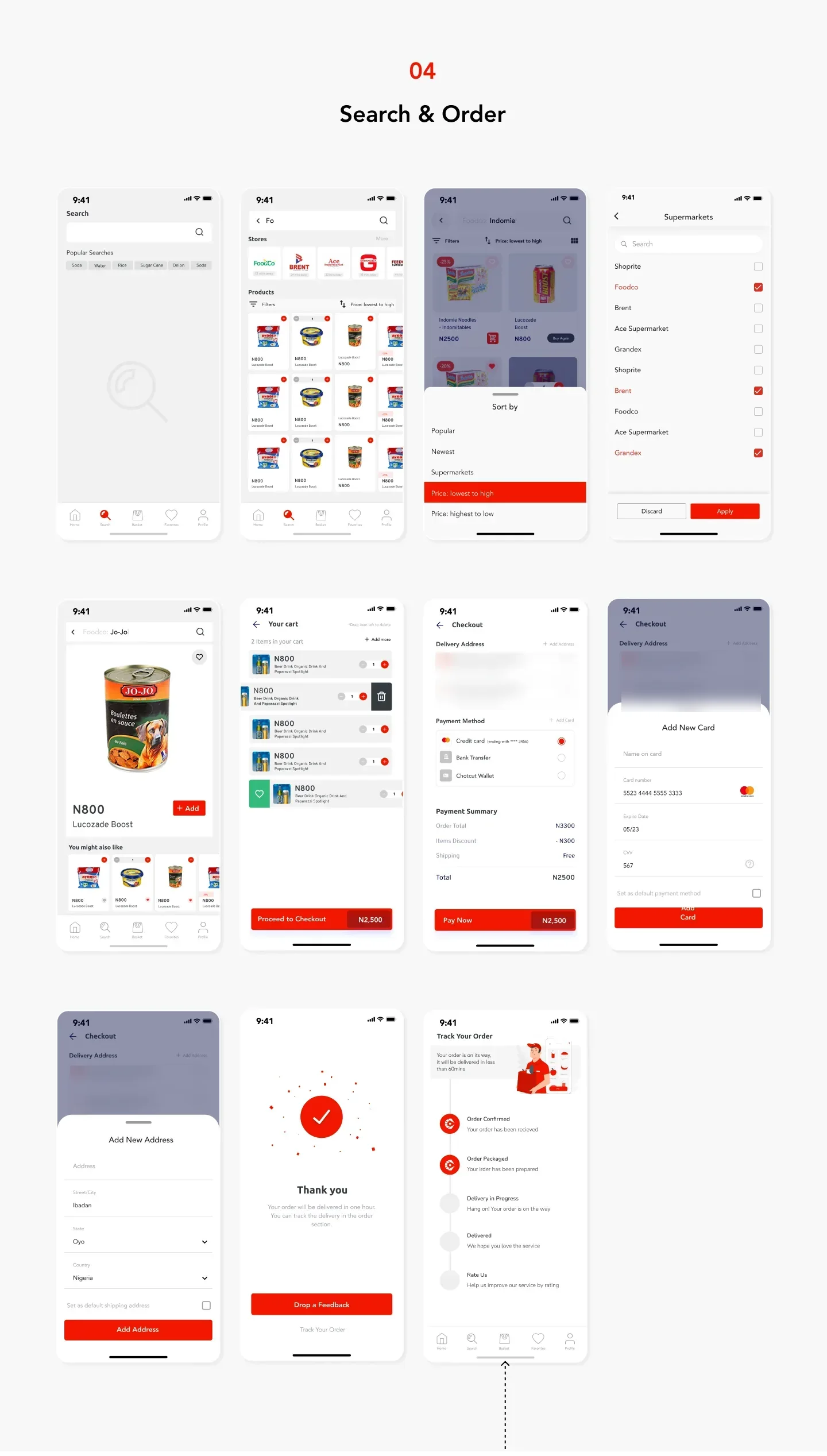
Select a store, add to cart, pay, order pickup, door delivery. Everything else, including recipes, stores and profile, hangs off that line, so the first thing a new user sees is a short path to getting something delivered.Design-level
Make discovery about food, not categories
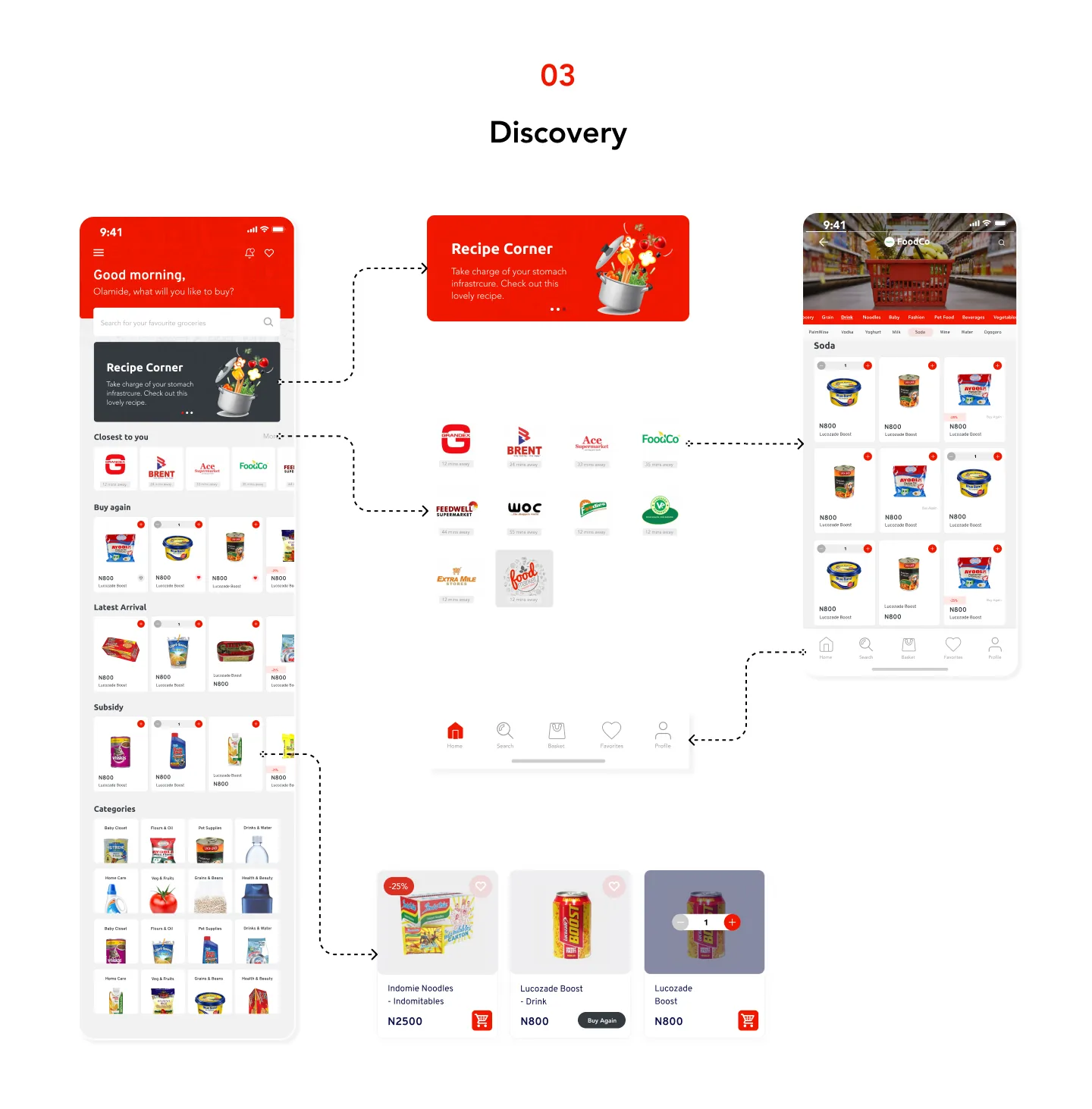
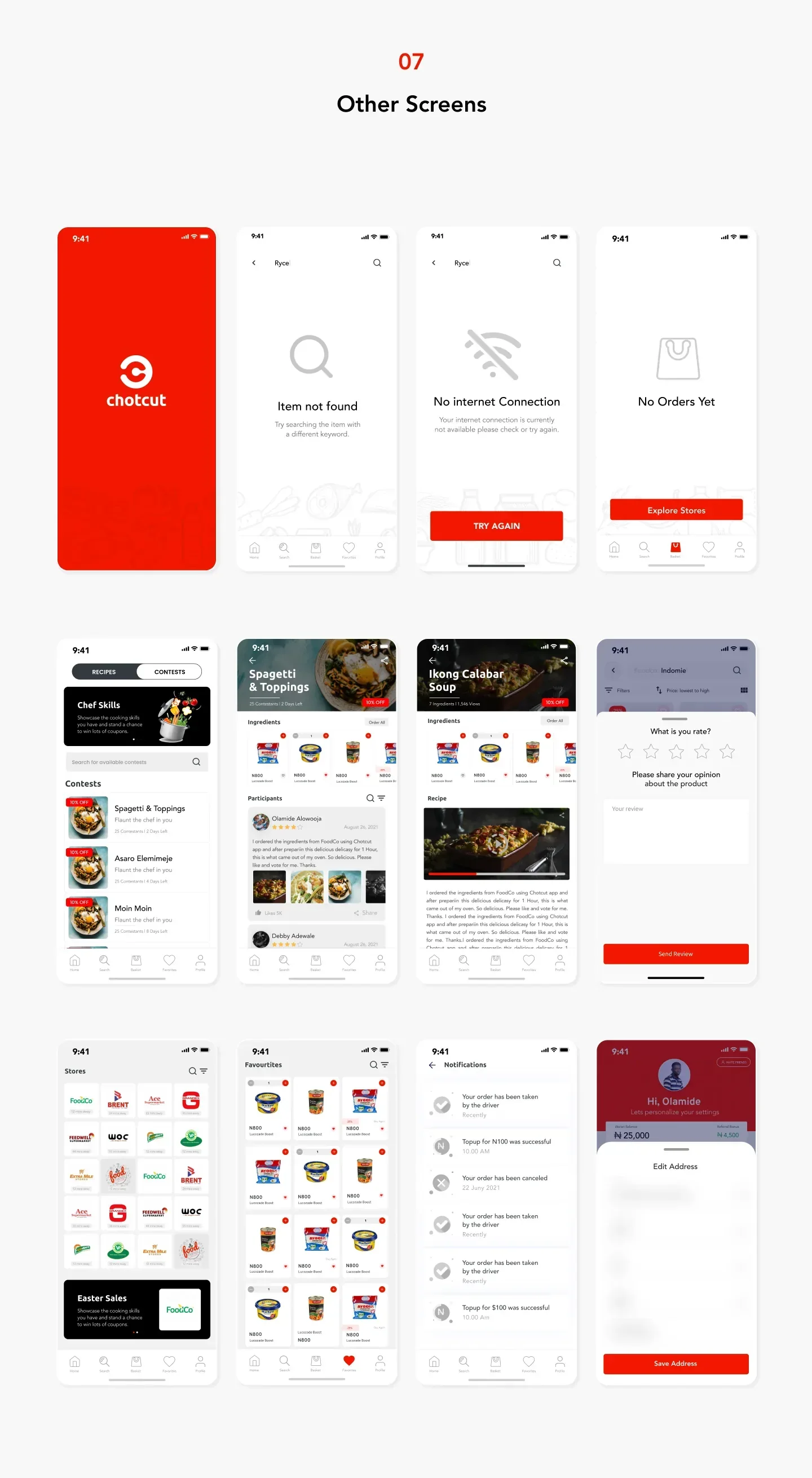
The home screen opens with a Recipe Corner, then “Closest to you” stores with minutes away, “Buy again”, latest arrivals and category grids, so a shopper who does not know what they want can start from a meal, and a repeat shopper is two taps from the usual basket. Search and ordering sit on their own flow with filters, a cart, checkout, a thank-you and order tracking.Judgement
Design for the order that is not yours
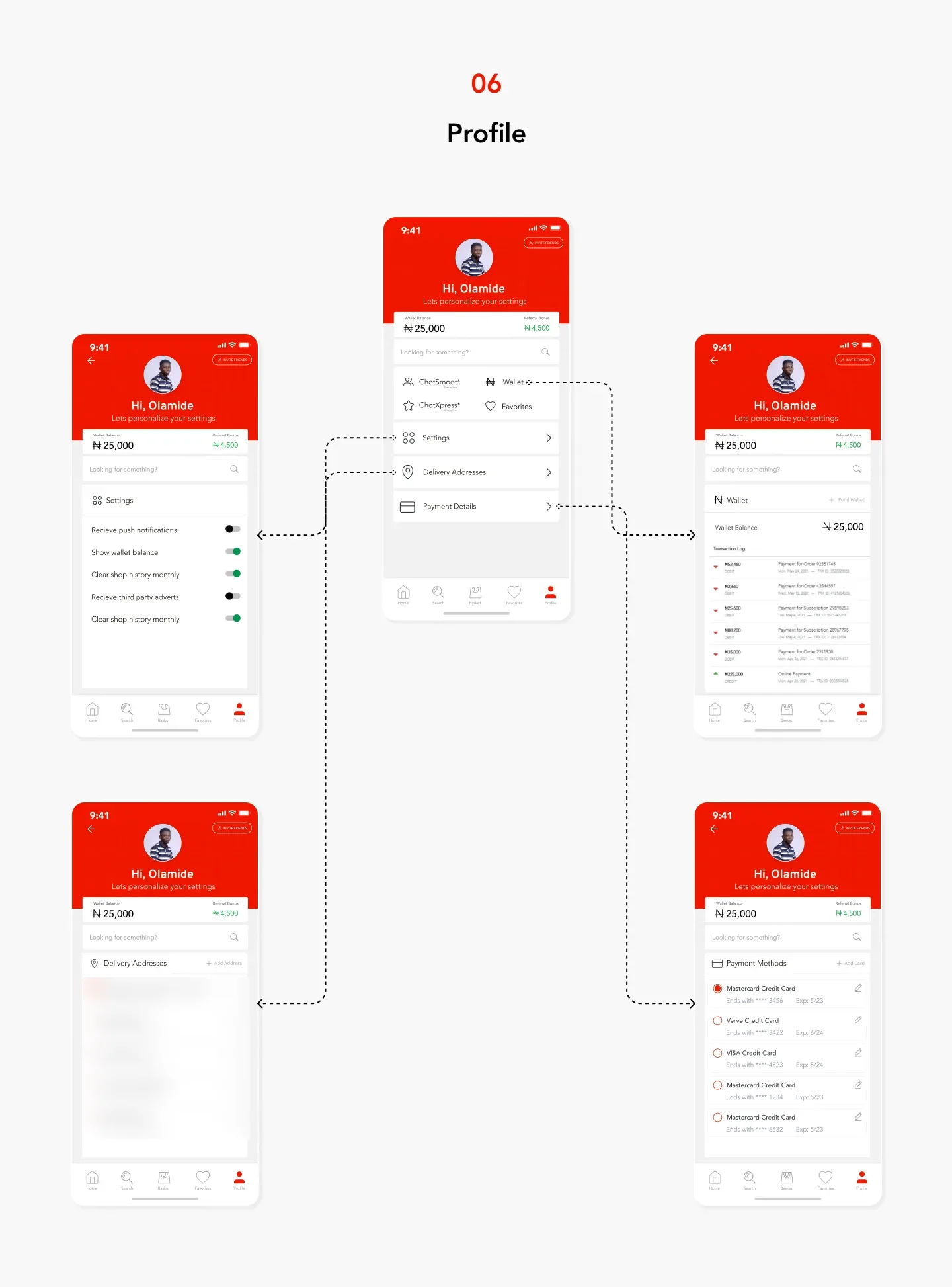
The profile holds several saved delivery addresses and payment methods, a wallet with a transaction log, and settings. Someone who orders often for a parent or a friend can pick the right address and pay without retyping it.Judgement
04 — The app
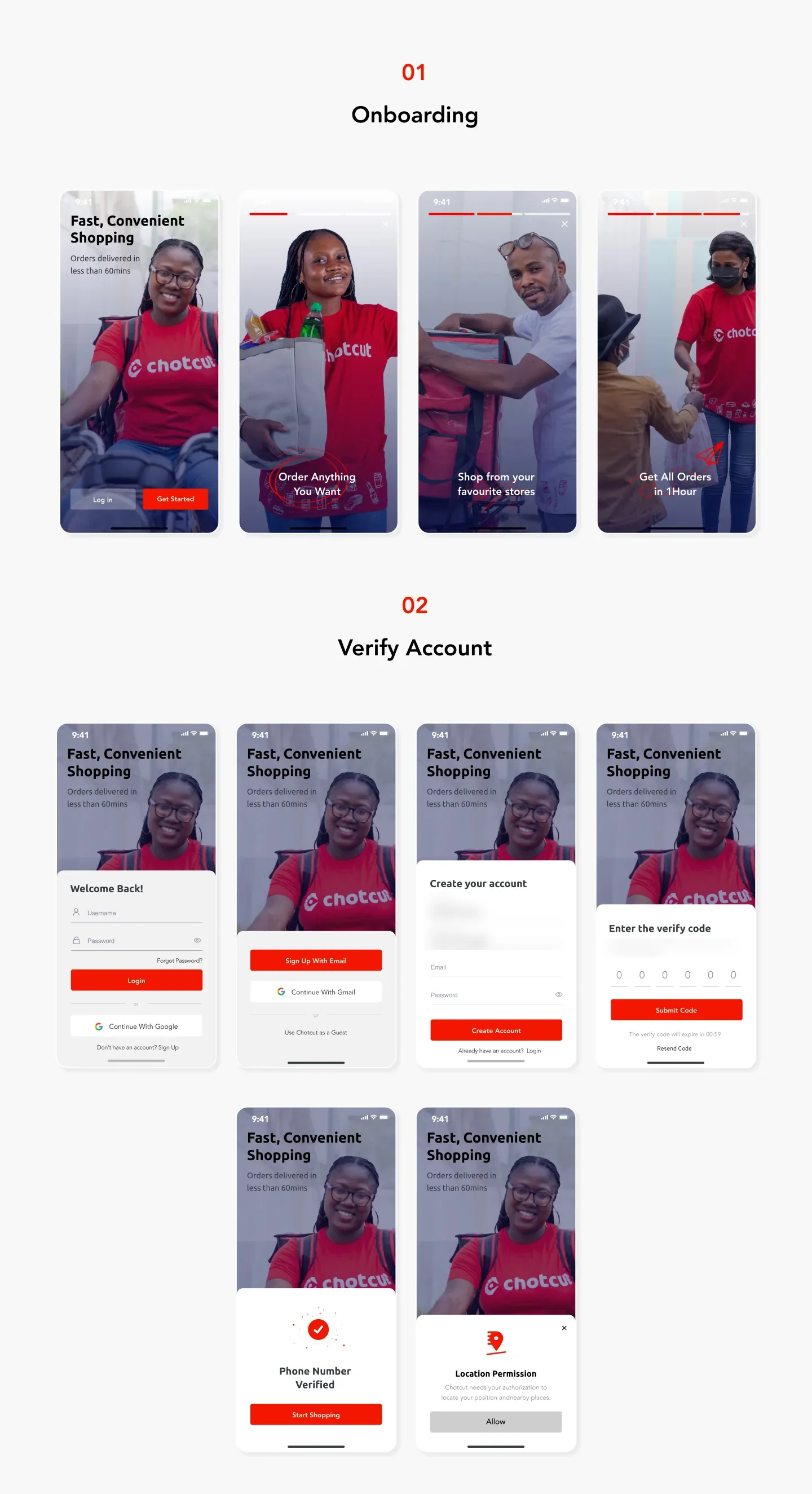
From onboarding to checkout.
05 — Beyond the app
The brand around it.
I also made the brand’s marketing material: a red identity with a short promise, “Fast, Convenient Shopping Experience for Everyone”, plus flyers, billboard artwork, social banners, a content calendar and launch videos for the app. The same red and white carry from the app to the landing page and the print, so a flyer and a screen look like one product.Design-level
06 — What I’d do differently
Test the 60-minute promise first.
Sixty minutes is the most expensive sentence in the goals. If I were starting again I would test it before designing the screens around it: with a handful of supermarkets, a handful of riders and a paper order sheet, to see what is actually possible, then design the tracking and the promise to match.Judgement